
Google I/O 2026: Gemini 'Omni', Android 17 & What to Expect
Discover the biggest announcements expected at Google I/O 2026 (May 19-20). We break down Android 17 leaks, Gemini's mysterious 'Omni' video model, and more.
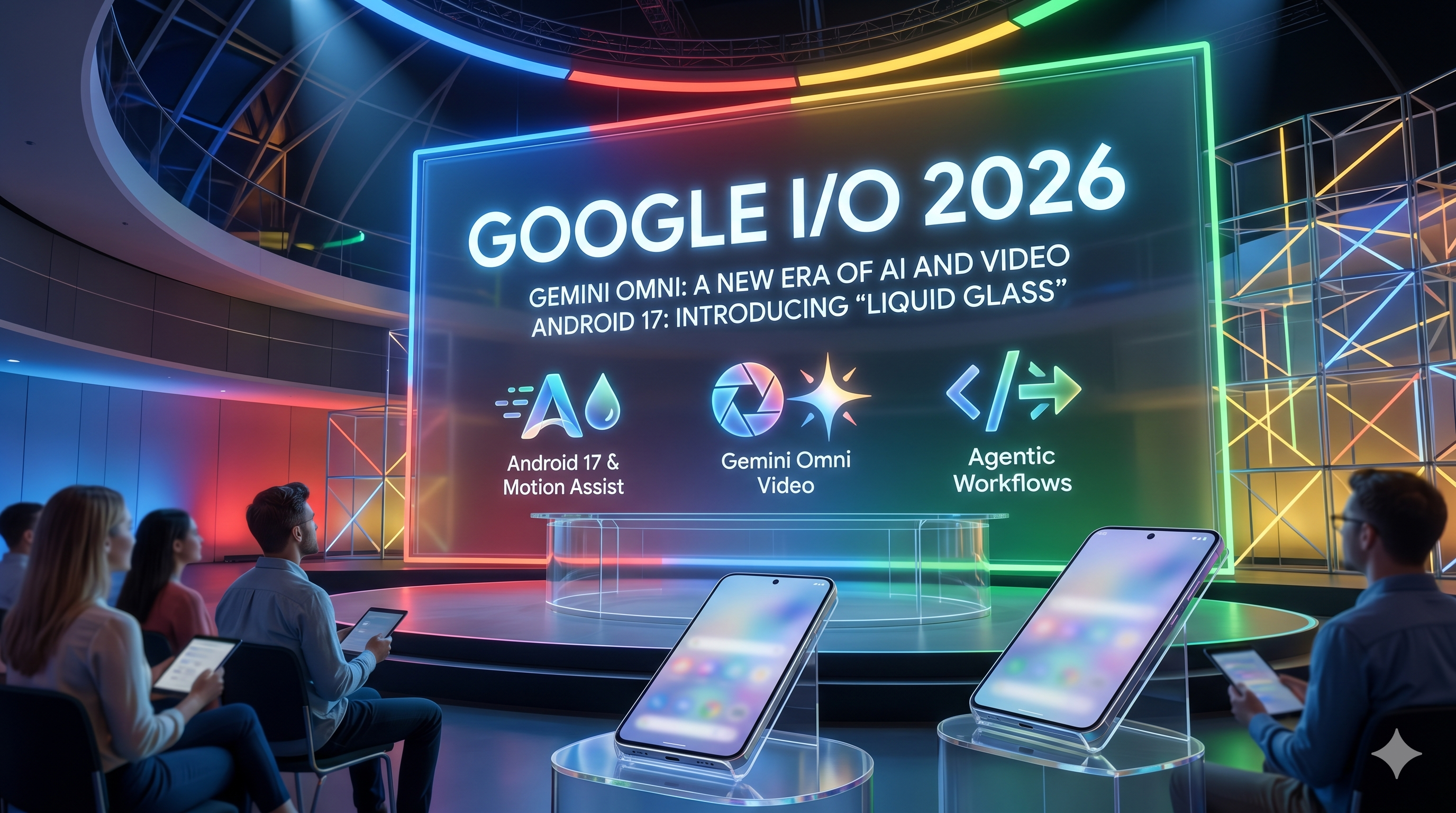
Google I/O 2026: The Gemini Evolution, Android 17, and Everything You Need to Know
Google I/O is back, and if the pre-event leaks and teasers are anything to go by, 2026 is shaping up to be one of the most transformative years for the tech giant. Scheduled for May 19–20, 2026, this year's developer conference is pushing the boundaries of what we thought possible with artificial intelligence, mobile operating systems, and agentic workflows.
Whether you’re a developer looking to integrate new tools or just a tech enthusiast wanting to know what your next Pixel phone will be able to do, here is your definitive guide to the biggest announcements and leaks ahead of Google I/O 2026.
The Elephant in the Room: Gemini's Mysterious "Omni" Model
AI is no longer just a buzzword; it’s the connective tissue of Google’s entire ecosystem. While we already know Google has been iterating heavily on Gemini, a massive UI leak just weeks before I/O has the tech community buzzing about something called Omni.
So, what exactly is Omni? The industry is currently torn between a few theories:
A Simple Rebrand: It could just be a unified, consumer-facing name for Gemini's current video generation capabilities.
A Brand New Video Model: Google might be introducing a completely new, Gemini-trained video model to sit alongside or replace the Veo architecture.
The Holy Grail (A True Omni-Model): This is the most exciting possibility. We might be looking at a single, unified Gemini system capable of handling text, image, video, and audio generation all at once without switching between specialized models. If true, this would be a massive leap forward in the AI arms race.
Expect Google to spend a significant portion of the keynote diving into these new multimodal capabilities and showcasing how "agentic coding" will change the daily lives of developers.
Android 17: Quality of Life Meets "Liquid Glass"
While AI grabs the headlines, Android remains the beating heart of Google’s consumer hardware. Android 17 is bringing some incredibly smart, user-centric features. Here are the most exciting additions we expect to see officially unveiled at the Android Show:
Motion Assist: If you get car sick while reading on your phone, this is for you. This feature displays a subtle moving dot on your screen that reacts to the physical movement of the vehicle you are in. It helps your brain process the motion, significantly reducing nausea.
Native App Locking: Finally! You will no longer need third-party apps or the "Private Space" feature to lock down individual apps. Android 17 is bringing native app locking via biometric authentication or a PIN.
A "Liquid Glass" Visual Overhaul: Building on Material You, early beta code suggests Android 17 will heavily feature translucent blur effects across the UI, giving it a sleek, layered, "Liquid Glass" aesthetic.
Double-Tap to Sleep: A simple, much-requested gesture that allows Pixel users to turn off their screens with two quick taps.
Desktop iPiP (Interactive Picture-in-Picture): For the multitaskers using external displays, apps can now be pinned into interactive, always-on-top windowing layers in desktop mode.
Open Source AI & The Cloud
Google isn't keeping all the good stuff locked behind enterprise paywalls. Following April's announcements, we expect further deep dives into Gemma 4, Google's latest generation of open-weights models.
We’re also anticipating more demos around "Race Condition", the fully open-source, multi-agent simulation powered by the new Gemini Enterprise Agent Platform. Google is leaning hard into showing developers how to build autonomous agents that can seamlessly communicate with one another.